Tla’amin Nation Wastewater Project
A routine impact assessment at t̓išosəm led to the rare discovery of a nearly 10,000-year-old archaeological site on the shores of the Salish Sea.
Overview
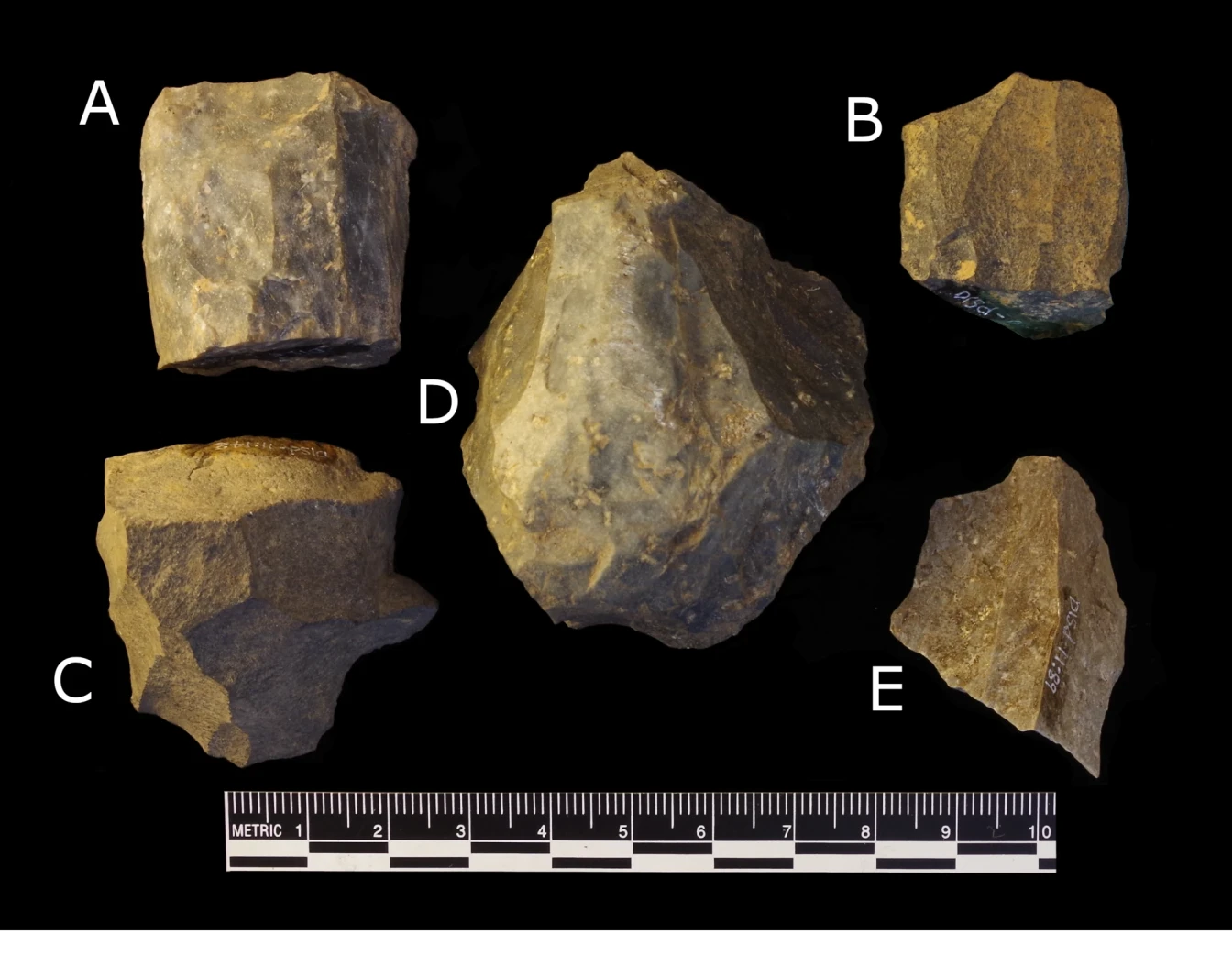
A 10,000 year old site was found at t̓išosəm when routine archaeological testing found hundreds of very ancient looking stone tools and lithic debitage (waste flakes from stone tool production).
At first, the age of the site was suspected to be early Holocene but a dating sample proved hard to find. The archaeological deposits where the artifacts were found lacked any organic materials to date. One excavation unit fortunately found a few fragments of burnt bone. Two North American radiocarbon dating labs failed to identify any datable collagen. Collagen degrades over time and especially in very old sites.
One of the last remaining burnt bone fragments was sent to Groningen in the Netherlands who specializes in dating cremated bone. They date carbonate, the burned crystallized collagen and returned a date of 9,890 – 9,552 cal BP years, proving that this archaeological component at t̓išosəm is one of the oldest in the province, and certainly on the south coast of the Salish Sea.
More Details
The following article originally appeared in the August 2022 Edition of Neh Motl, the community newsletter of Tla’amin Nation. View the full newsletter here.
A thrilling, once-in-a-lifetime discovery of a 10,000-year-old archaeological site was recently found in Teeshohsum. Archaeological sites of this antiquity are extraordinarily rare with only a few known in Western North America, and fewer still in British Columbia. This site is associated with ancient beach terraces and the post-glacial river (now Sliammon Creek) delta formed when sea levels were much higher following the last glaciation.
This site was found in early 2021 when we (Colleen Parsley and her team Aquilla Archaeology Ltd.) were commissioned by the Lands Department to complete an archaeological impact assessment of a proposed new sanitary alignment from the existing wastewater treatment plant on Waterfront and Sliammon Roads.
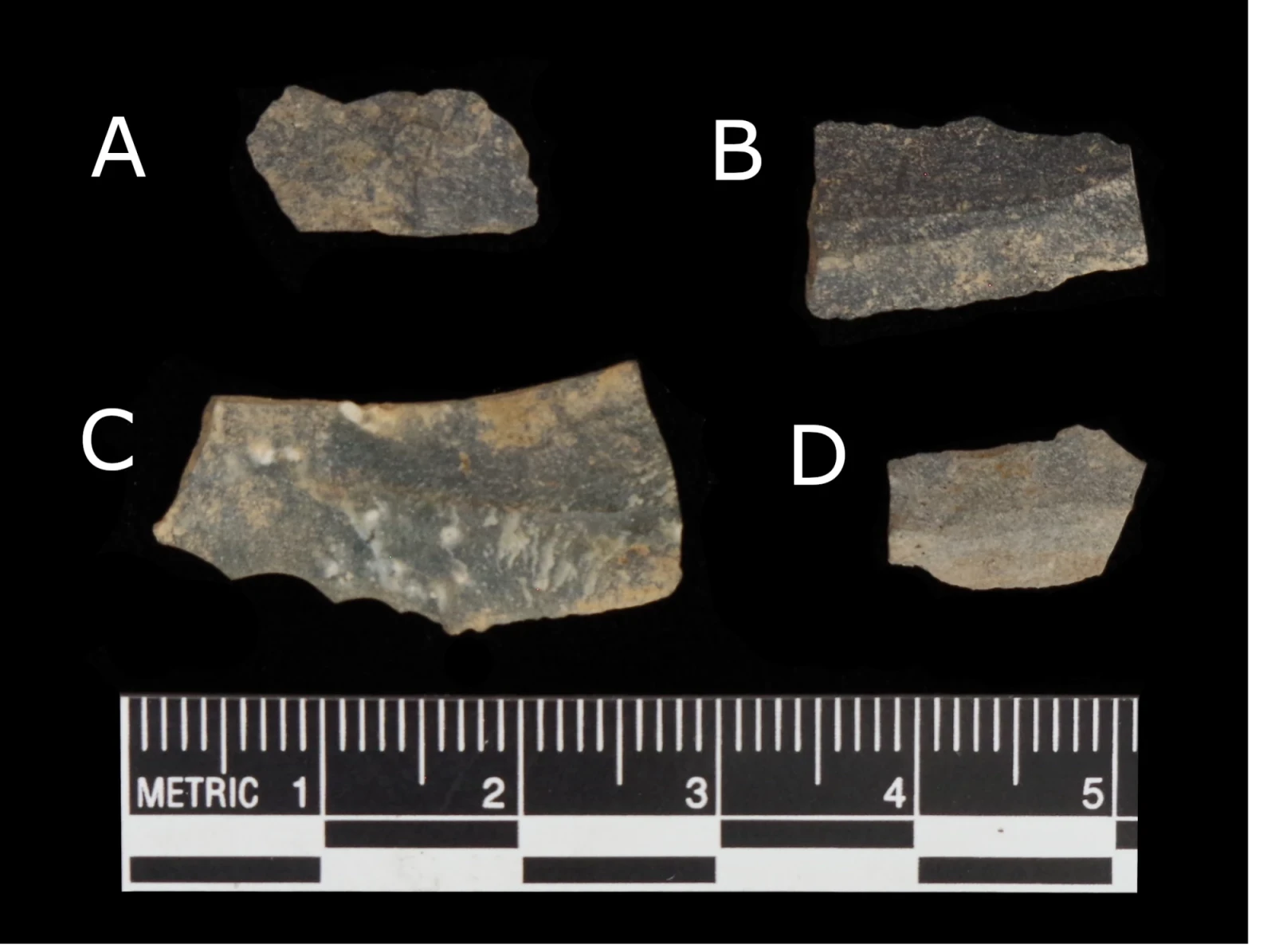
At the outset of this study, we expected our results would support previous findings that DlSd-11 was a seasonally occupied late period (~1000 years) site tied to annual salmon runs and harvests. Former archaeological studies found shell midden deposits parallel to the shoreline with abundant ground slate knives used for processing salmon (Parsley 2016; Springer et al. 2013). But the site was also discontinuous and historically disturbed (Parsley 2016). There has long been potential of also finding ancestral human remains as several Tla’amin citizens relayed stories of discovering ancient skeletal ancestral remains along Waterfront Road. However, previous studies have not found human remains.
Cultural knowledge often shared by Tla’amin Elders and residents recount how Tla’amin people were relocated here after the village of Teeskwat was forcibly taken by colonial settlers to build a dam and paper mill in 1910 at the mouth of Powell River (Osmond 2018; Paul et al. 2014). Previous studies at Teeshohsum have not encountered significantly deep nor dense archaeological shell midden to date, which supports community knowledge that Teeskwat, not Teeshohsum, was a principal village of Tla’amin people.
Bearing all of this in mind, we commenced the largest and most comprehensive archaeological work to occur in Teeshohsum.
We excavated sixty-five tests and two hand-excavated 1 x 1 m units. Field results confirmed archaeological deposits were disturbed with only remnants of intact deposits with little shell and a moderate slate and bone artifact assemblage. Things started to change as we rounded the corner at the Sliammon Road intersection where our tests found increasing density of shell midden as the elevation increased (i.e., where the current homes are). We found numerous artifacts (78) consistent with late period cultural sites (ca. 1000 years) but no ancestral human remains were found.
Where Sliammon Road begins to slope up towards HWY 101, we thought this shell midden site would decrease and eventually thin out to become non-existent. This is exactly what happened. Conventional archaeological practice under provincial permit, however, requires us to demonstrate negative archaeological test results for at least 15 metres before we can definitively say we found an archaeological boundary. As we continued testing and were about to wrap up the fieldwork, something totally unexpected occurred.
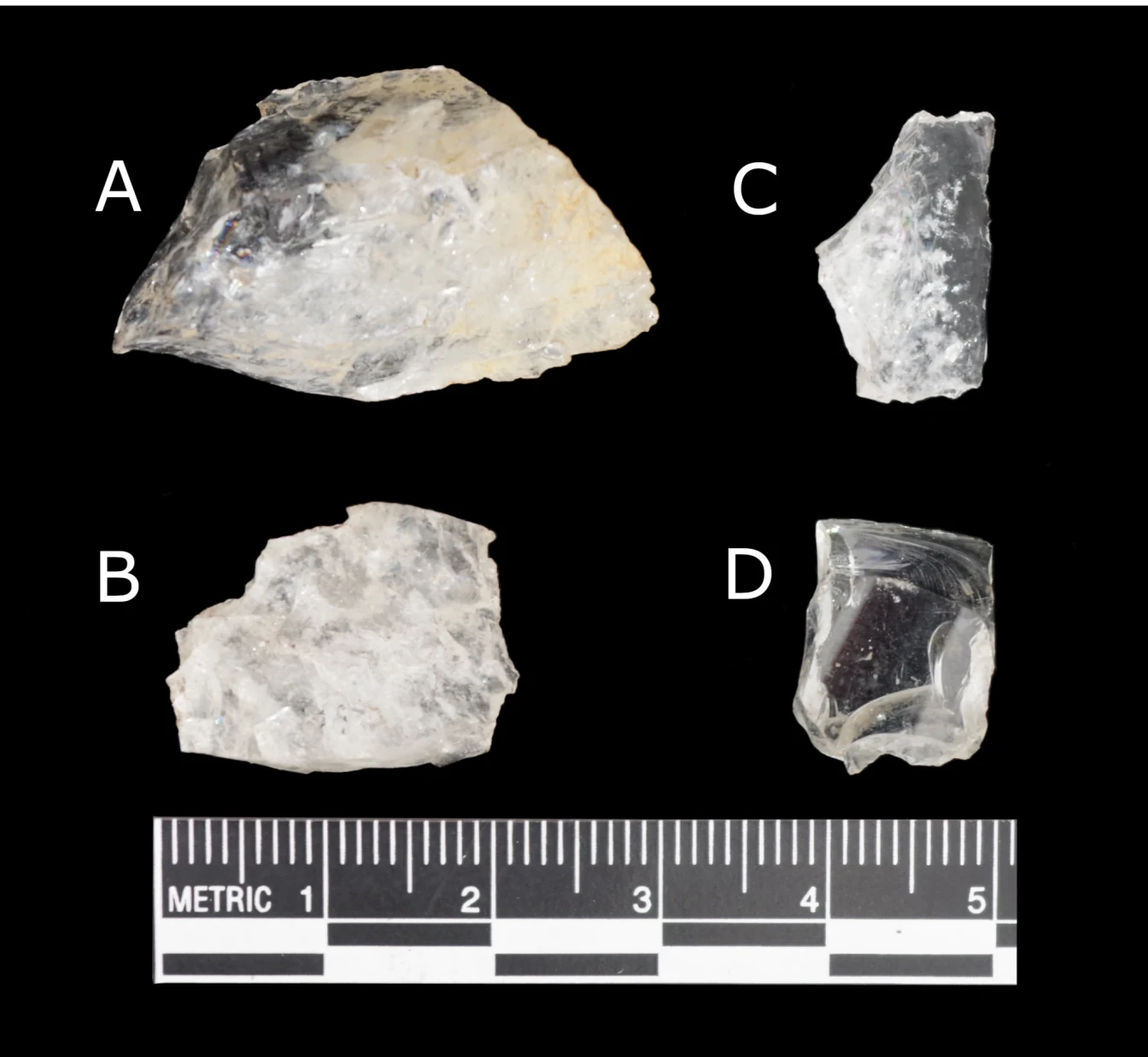
Very weathered buried stone artifacts in undisturbed “sterile” looking glacial sands appeared. These sands are a deep orange colour without any shell or organics. Testing further up Sliammon Road, buried ancient paleo-beach terraces with lithic stone artifacts stylistically similar to the earliest occupational sites known in British Columbia were uncovered. Early Period archaeological sites in Western North America that are more than 9,000 cal BP are found in Alaska at On Your Knees Cave (Dixon 2008), Stave Lake Watershed near Mission (McLaren 2017), on the Central Coast at Haida Gwaii (Fedje et al. 2008; McLaren and Smith 2008) and Namu (Carlson 1996), and the Fraser Canyon at Milliken (Carlson and Magne 2008; Mitchell and Pokytylo 2014), and Glenrose Cannery (Matson 2014).
A few other undated sites with similar evidence include two undated Copeland Island sites in Tla’amin territory south of Desolation Sound (Parsley 2013), and another site in Tla’amin territory at Lang Bay (Chalmer 2013; Springer et al. 2013). But of these directly dated Early Period sites, only Teeshohsum, Milliken and the Stave Lake Complex are older than 9,000 years. On the south coast of BC, Teeshohsum is the only site that is located on the shores of the Salish Sea.
Footnote There is data for similarly aged sites on Quadra Island (Fedje et al. 2018, 2021; Mackie et al. 2018).
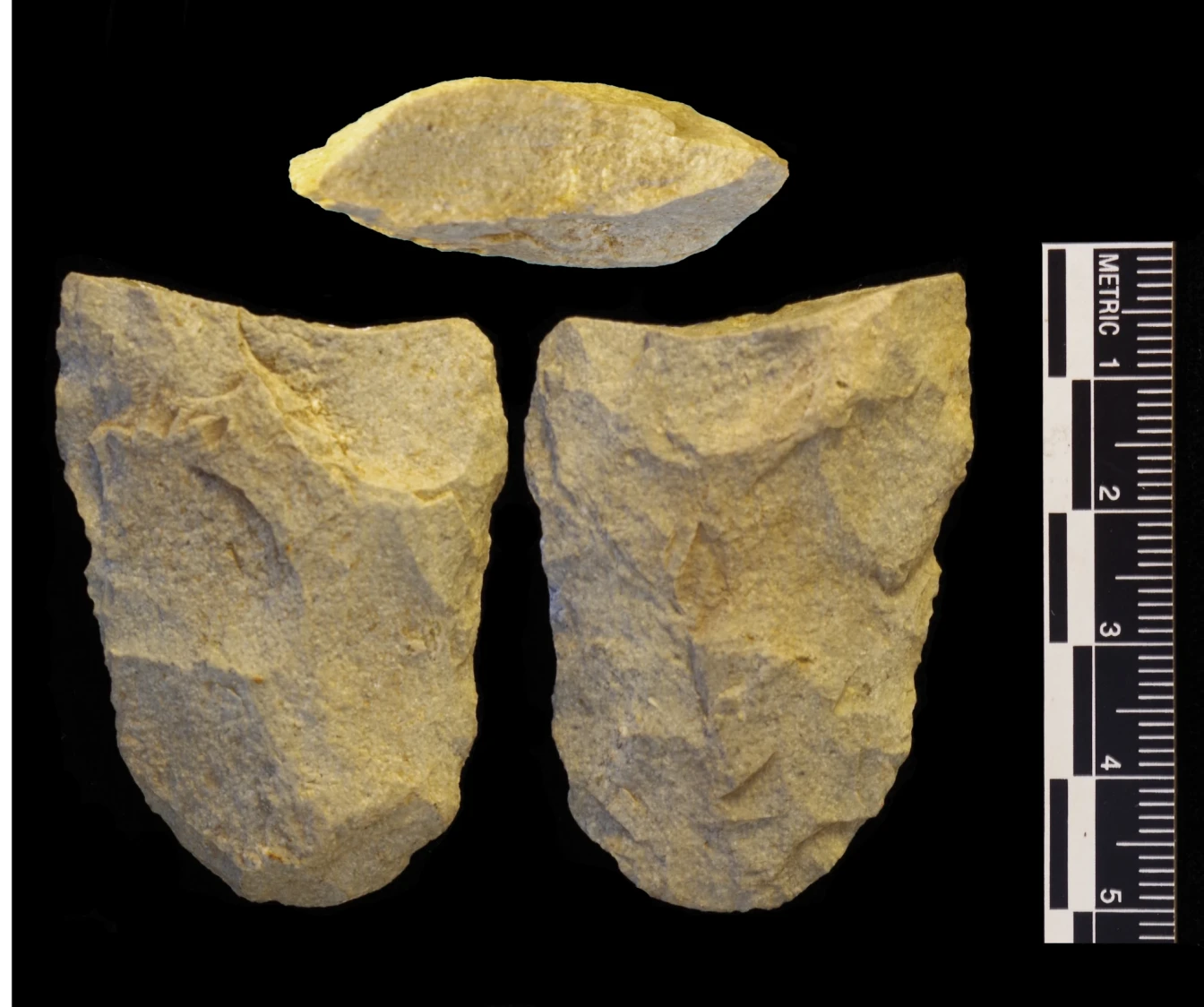
As testing continued inland, we recovered 229 artifacts from tests. We suspected these to be around 9,000 years old due to their style and position in the glacial fluvial sands (old surface) located on ancient shoreline landforms. These ancient shorelines are located on top of glacial marine sands (old sea bottom) and within the ancient intertidal zones in between the beach terraces.
Archaeological sites of this antiquity are notoriously difficult to radiocarbon date due to the lack of organic carbon and rarely have preserved bone found in these contexts. Luckily, we were able to recover a few small and extremely weathered bone fragments that could be sent as samples to obtain a radiocarbon date. Bone collagen required for radiometric measurements could not be found in the first sample sent for radiocarbon dating (BETA). A second bone sample was sent to a different lab and it was also reported that no collagen survived in the sample and it was not dateable (ARIZONA AA). Finally, with only a few pieces of bone left, two of which are calcined (burnt), it was determined our last chance was to send a burnt bone sample to the University of Groningen in the Netherlands. Researchers at the University of Groningen developed a method for dating burnt bone that does not rely on surviving organic collagen but on thermally altered carbonate, which is much more stable over time. Due to their backlog, it took the lab more than a year to study the sample. This last spring (2022) the results came back (GrM-28320) and it was well worth the wait. The burnt bone was successfully dated to 9,890 – 9,552 cal BP years, proving that this archaeological component at Teeshohsum is one of the oldest in the province, and certainly on the south coast of the Salish Sea.
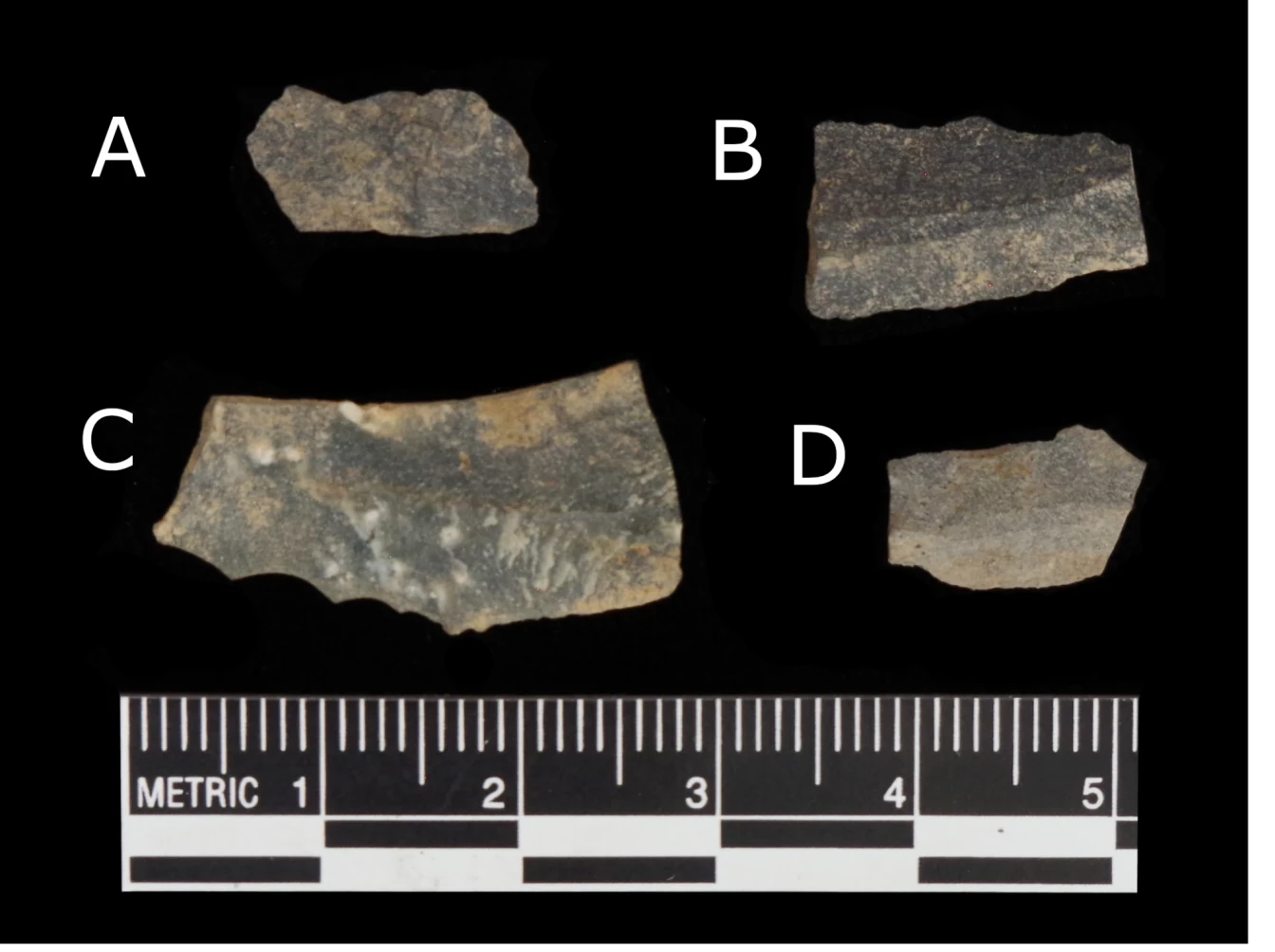
This 10,000-year-old archaeological site at Teeshohsum is an incredibly important discovery. The association of this site with the much larger postglacial Sliammon River was likely a key reason why people were living here 10,000 years ago. The stone dacite and andesite stone artifacts show evidence of early stages of stone tool manufacturing and suggest that quarrying river cobble was a key activity here. These are preliminary findings and, while they are exceptional for a routine archaeological impact assessment, further targeted and detailed studies could help shed more light on the early people of Teeshohsum and the early people of the Northwest Coast. More archaeological work could help us to obtain additional and possibly older dates. We need to identify the western extent of the site.
More work should investigate the plant and animal communities, and the environmental conditions which were clearly different and difficult to imagine. With so many questions needing answers, I hope there will be opportunities to conduct more studies in the future. Until then stay tuned for an update about the peer-reviewed journal article that is currently in preparation.
Acknowledgements
Tla’amin Nation is largely to thank for strong protective archaeological policies by encouraging and supporting strong leadership to enforce them.
Sincere thanks to Steve Thompson who is credited with supervising documentation of this site and skillfully producing the elevation schematic (Figure 6) and photographs. We are very lucky to rely on Laura Termes' osteological expertise; she completed all the faunal identifications and analysis. We are grateful to Jennifer Kester, the GIS Manager at Tla’amin, for obtaining and processing the LiDAR data for our use, which was immensely helpful for this study. We also wish to thank our Tla’amin Nation archaeology team member Jason Francis, and machine operator James. Our sincere gratitude is extended to April Treakle who allowed us to hand excavate a 1 x 1 m unit in her yard.
- Carlson, Roy L.; 1996 Early Namu. In Early Human Occupation in British Columbia, edited by L. Carlson, R. and Dalla Bona, pp. 81–102. UBC Press.
- Carlson, Roy L., and Martin Magne; 2008 Projectile Points Past and Present. In Projectile Point Sequences in Northwestern North America, edited by Roy L. Carlson and Martin Magne. SFU Archaeology Press.
- Chalmer, Nyra; 2013 Report on the Testing of the “Lang Bay site” (DkSc-15), Sunshine Coast, British Columbia - Appendix A in Final Report on Archaeological Investigations (2009-0132) by the Simon Fraser University–Tla’amin First Nation Archaeology and Heritage Stewardship Project, Powell River Regional District, British Columbia. On file with the BC Archaeology Branch.
- Dixon, E. James; 2008 Bifaces from On Your Knees Cave, Southeast Alaska. In Projectile Point Sequences in Northwestern North America.
- Fedje, Daryl, Alex Lausanne, Duncan McLaren, Quentin Mackie, and Brian Menounos; 2021 Slowstands, stillstands and transgressions: Paleoshorelines and archaeology on Quadra Island, BC, Canada. Quaternary Science Reviews 270:107161. DOI:10.1016/j.quasci-rev.2021.107161, accessed May 25, 2022.
- Fedje, Daryl, Duncan McLaren, Thomas S. James, Quentin Mackie, Nicole F. Smith, John R. Southon, and Alexander P. Mackie; 2018 A revised sea level history for the northern Strait of Georgia, British Columbia, Canada. Quaternary Science Reviews 192:300–316. DOI:10.1016/J.QUASCIREV.2018.05.018, accessed October 25, 2018.
- Fedje, Daryl W., Quentin Mackie, and Tina McLaren, Duncan Christensen; 2008 A Projectile Point Sequence For Haida Gwaii. In Projectile Point Sequences in Northwestern North America, pp. 19–40.
- Mackie, Quentin, Daryl Fedje, and Duncan McLaren; 2018 Archaeology and Sea Level Change on the British Columbia Coast. Canadian Journal of Archaeology 42:74–91.
- Matson, R.G.; 2014 The Old Cordilleran Component at the Glenrose Cannery Site. In Early Human Occupation in British Columbia, edited by Luke Carlson, Roy L. and Dalla Bona, pp. 111–122. UBC Press.
- McLaren, Duncan; 2017 The Occupational History of the Stave Watershed. In Archaeology of the Lower Fraser River Region, edited by Mike K. Rousseau, pp. 149–158. SFU Archaeology Press.
- McLaren, Duncan, and Nicole F. Smith; 2008 The Stratigraphy of Bifacial Implements at the Richardson Island Site, Haida Gwaii. In Projectile Point Sequences in Northwestern North America.
- Mitchell, Donald, and David Pokytylo; 2014 Early Period Components at the Milliken Site. In Early Human Occupation in British Columbia, edited by Luke Carlson, Roy L. and Dalla Bona, pp. 65–82. UBC Press.
- Osmond, C.; 2018 Tla’amin History from the Crossroads of Colonialism: Part Two From Tišosem to Sliammon. Neh Motl, March 2018.
- Parsley, Colleen; 2013 Archaeological Impact Assessment of DlSe-24, DlSe-25, and Nuxwum (EaSe-13), Kwookwak thys (Copeland) Islands, BC Parks CURE Project, Permit 2012-0307. On file with the BC Archaeology Branch.
- 2016 Results of the Archaeological Impact Assessment Studies of 6621, 6667, and 6837 Klahanie Drive and a Portion of the Proposed Sliammon Waste Water Treatment Plan at Teeshoshum, Powell River, BC. On file with the BC Archaeology Branch.
- Paul, Elsie; Paige; Raibmon, and Harmony Johnson; 2014 Written As I Remember It. UBC Press.
- Springer, Chris; Megan; Caldwell, Nyra; Chalmer, Julia; Jackley, and, and Dana Lepofsky; 2013 Final Report on Archaeological Investigations (2009-0132) by the Simon Fraser University–Tla’amin First Nation Archaeology and Heritage Stewardship Project, Powell River Regional District, British Columbia. On file with the BC Archaeology Branch.