kʷuθaysqɛn Shelter Point
An archaeological assessment at Shelter Point revealed longhouse depressions, ancient artifacts, and evidence of Tla’amin occupation extending back thousands of years.
Overview
The caretaker’s residence was destroyed by a fire in Shelter Point Regional Park on Texada Island in 2012. The park features a campground, concession, and boat launch managed by the qathet Regional District (previously known as the Powell River Regional District). Aquilla Archaeology Ltd. became involved alongside Tla’amin Nation to complete archaeological studies of the park prior to the reconstruction of the residence.
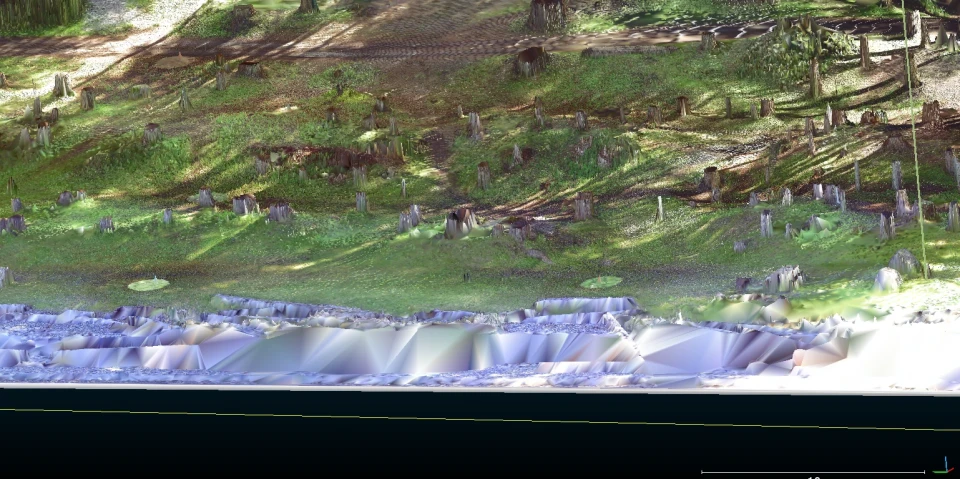
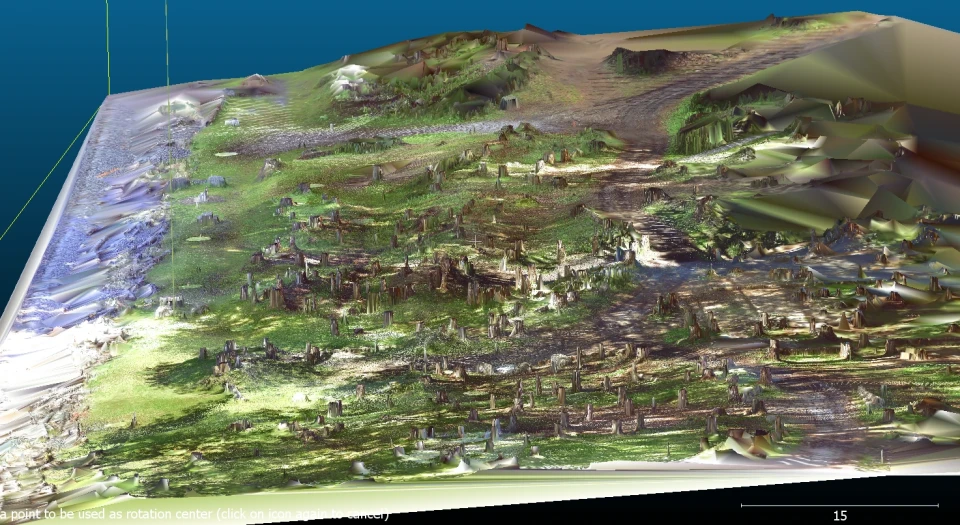
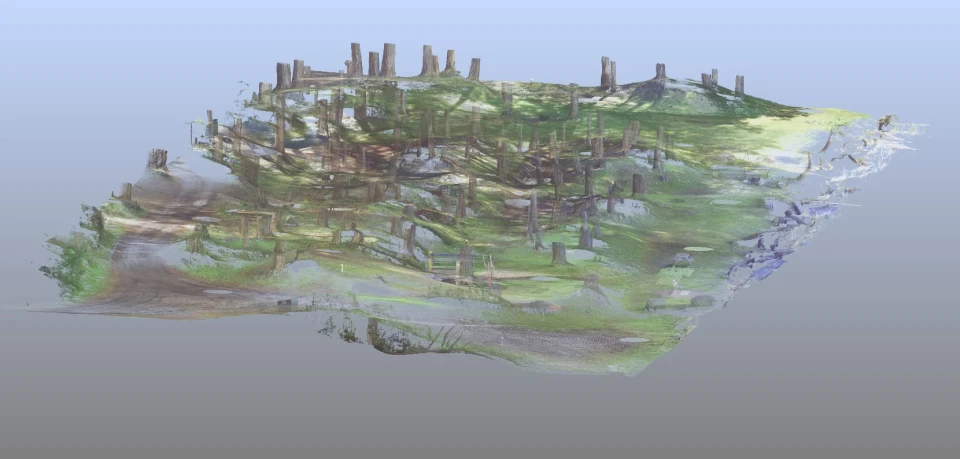
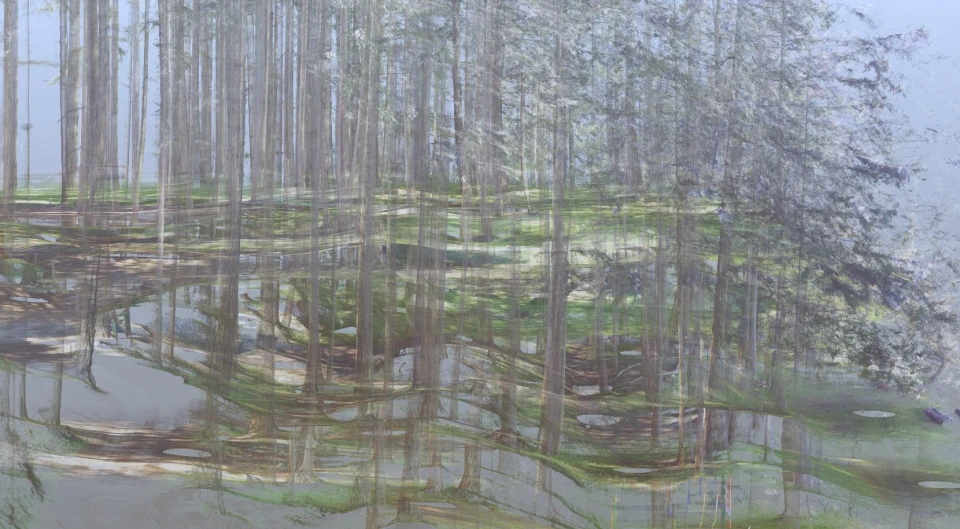
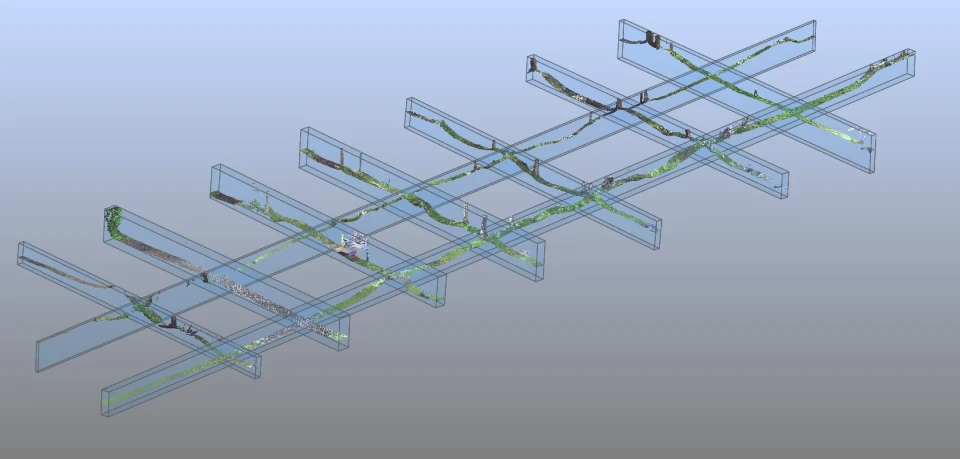
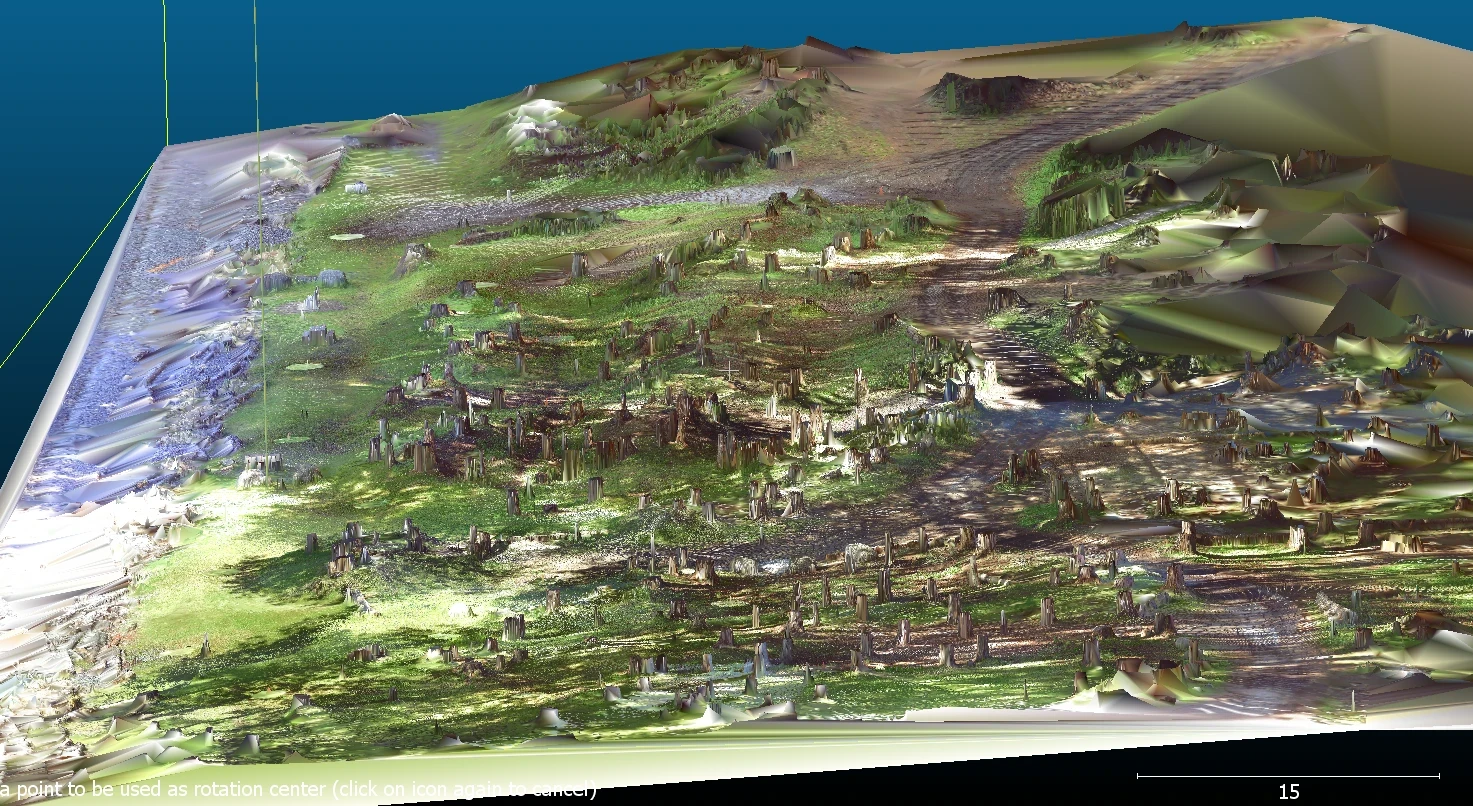
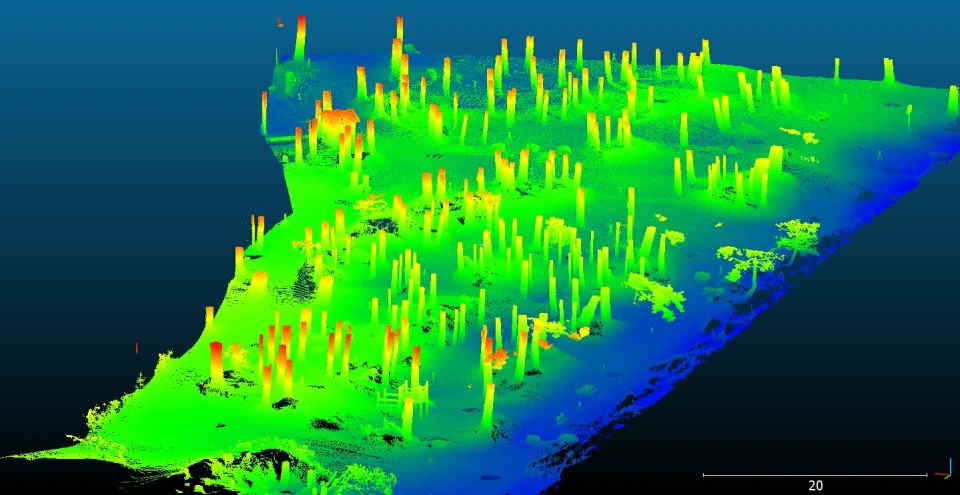
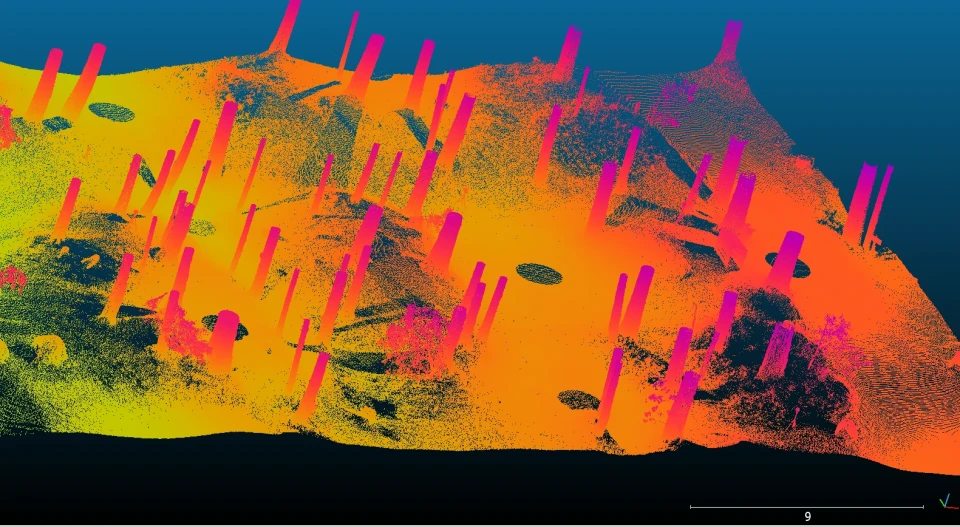
Long, linear depressions from former longhouses arranged in three distinct rows indicated this was a substantial ancient village site. Many ancient features, artifacts and animal remains were found dated to 70—690 cal BP years. Permission was granted to use a 3D laser scan to document the longhouse depressions in detail. This has since been used as a widely presented educational tool that also led to the qathet Regional District, the qathet Museum, Tla’amin Nation and Aquilla Archaeology working together to build an educational display to share and showcase the findings of ancient Tla’amin culture and settlements.
More Details
The following article originally appeared in the August 2021 Edition of Neh Motl, the community newsletter of Tla’amin Nation. View the full newsletter here.
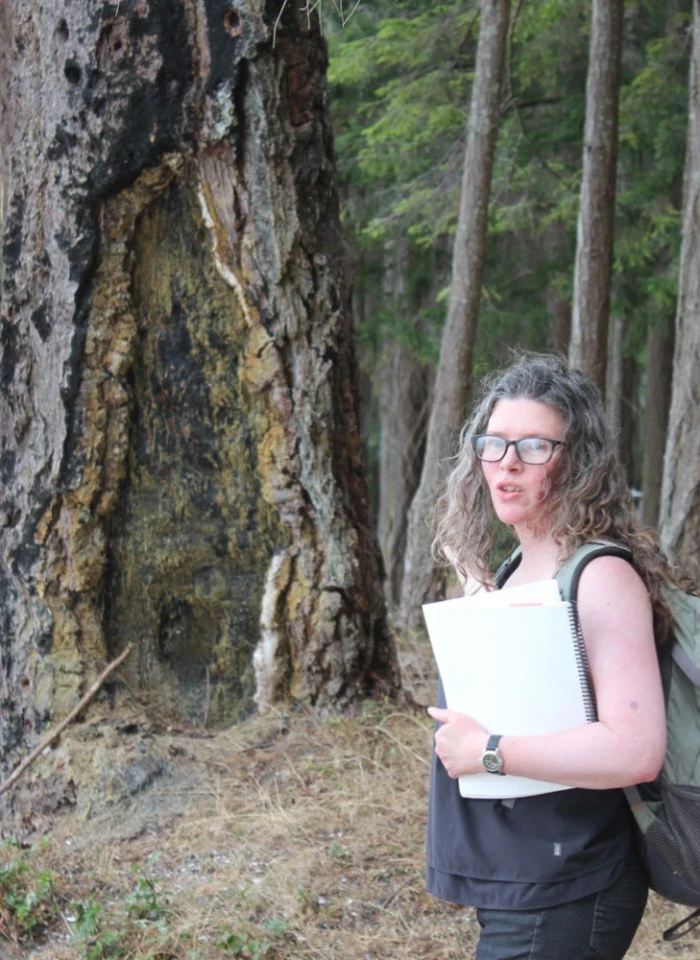
Archaeologist Colleen Parsley did a presentation at Shelter Point to talk about the significance the area for Tla’amin. This is one story by Colleen Parsley:
In 2012-13, a fire burned a couple of structures to the ground at Shelter Point. This concerned Tla’amin and a site visit was carried out because the Regional District wanted to rebuild and develop. On their ways over here for the site visit, two of Tla’amin staff were followed by the RCMP from the ferry all the way to Shelter Point, and were immediately questioned as to what they were doing here, with suspicion, and that they didn’t belong.
I began to do the archaeology for the Regional District. What I started to realize was that here on Texada Island, there is a colonial myth that settlers would tell one another, including tourists. The myth was that Tla’amin never lived here because the Island was sinking into the ocean, and wasn’t very habitable. It was very convenient for settlers because suddenly it was vacant and there was no history here.
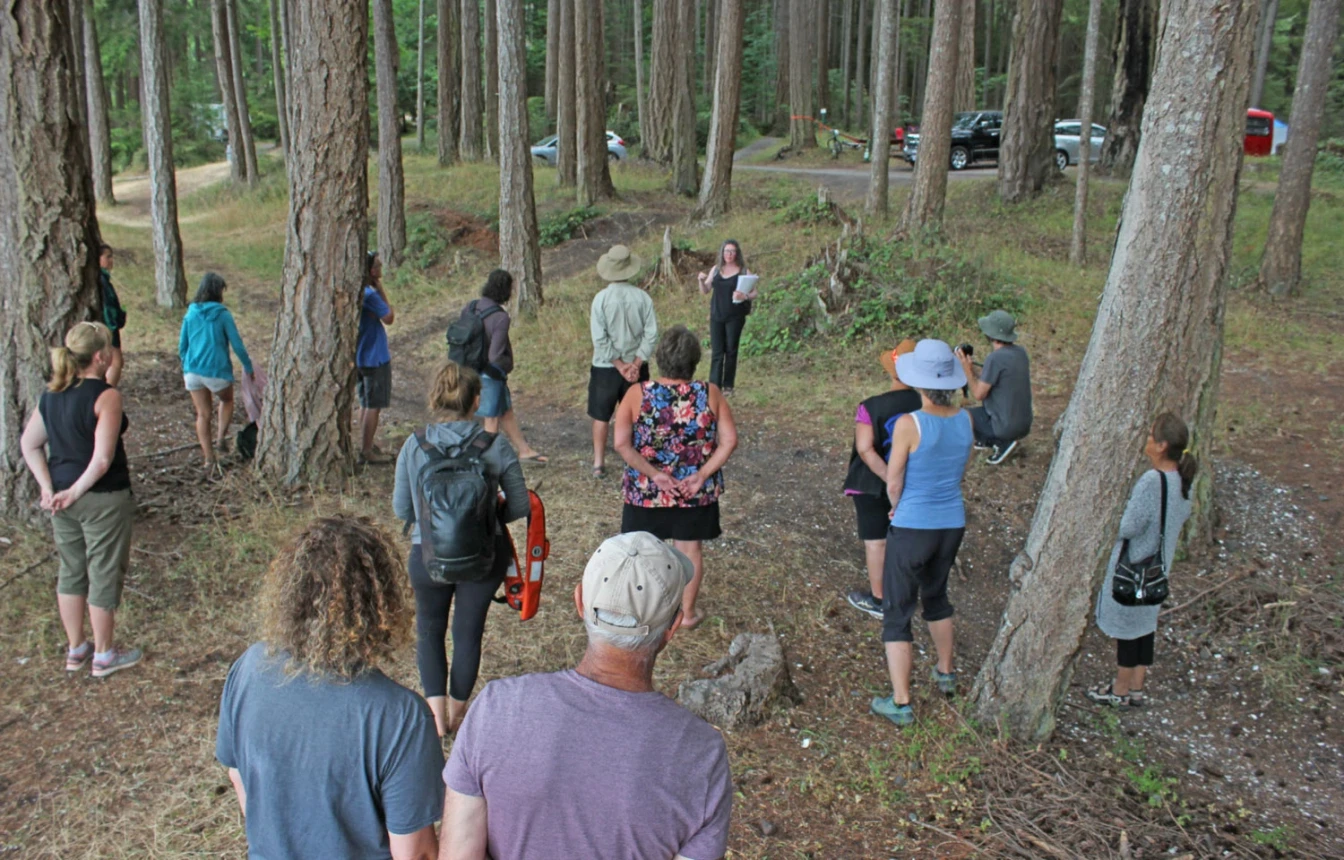
We moved forward on this project to uncover the site in a way to combat the racist politics, and change through education, while introducing the ideas of cultural history and the ancient ties that the nation has here. We uncovered incredible artifacts that goes back to 3,300 years ago. We came up with this idea that we would have a display on site. Here at Shelter Point we have a 24-7 caretaker, and the nation wanted its history known to the outside world, so that is why we built a display. There is an interpretation panel that is just outside the concession.
There are longhouse features here. There are massive house depressions just past the caretakers. This could potentially go back hundreds of years. We think there are at least twelve long houses here. We are going to help the Regional District help put up new campsites.
This site has been occupied for 3,000 years at least. Some of the artifacts tell us that. We have this continuous use through archaeological records that show that it’s really not long ago that people were living here. 800 years is really not that long ago.